Última actualización el July 27, 2026
If you’re sitting there wondering whether you should buy black-and-white contrast cards, follow a strict play schedule, or try to “do more” with your newborn, take a deep breath and pause. You’re doing an amazing job, mama.
At this stage, your baby doesn’t need fancy toys or rigid routines. Both as an early childhood educator and a mom, I can tell you that a newborn’s world revolves around three simple things: feeling completely safe, gently discovering new senses, and building a deep, beautiful bond with you. The truth is, your face, your voice, and your warmth are the absolute best educational tools your baby has right now. Everything else is just extra.
What to Expect from 0 to 3 Months (Quick Snapshot)
Here is a quick look at the key developmental milestones during these first 12 weeks:
- Vision: They focus best at a distance of 8 to 12 inches and love high-contrast patterns (black, white, and red).
- Motor Skills: They start lifting their head during tummy time and open their hands more often.
- Social/Emotional: You’ll see their first smiles, intentional eye contact, and sweet, soft vocal sounds (“coos” and “aahs”).
10 Simple & Engaging Activities for Your Baby
1. The Human Mirror (Visual Tracking & Connection)
- How to do it: Bring your face close to your baby (about 8–12 inches away) and make soft, exaggerated expressions—open your mouth slowly, smile gently, or stick out your tongue.
- Why it helps: Encourages visual focus, facial recognition, and activates mirror neurons for future social-emotional development and empathy.
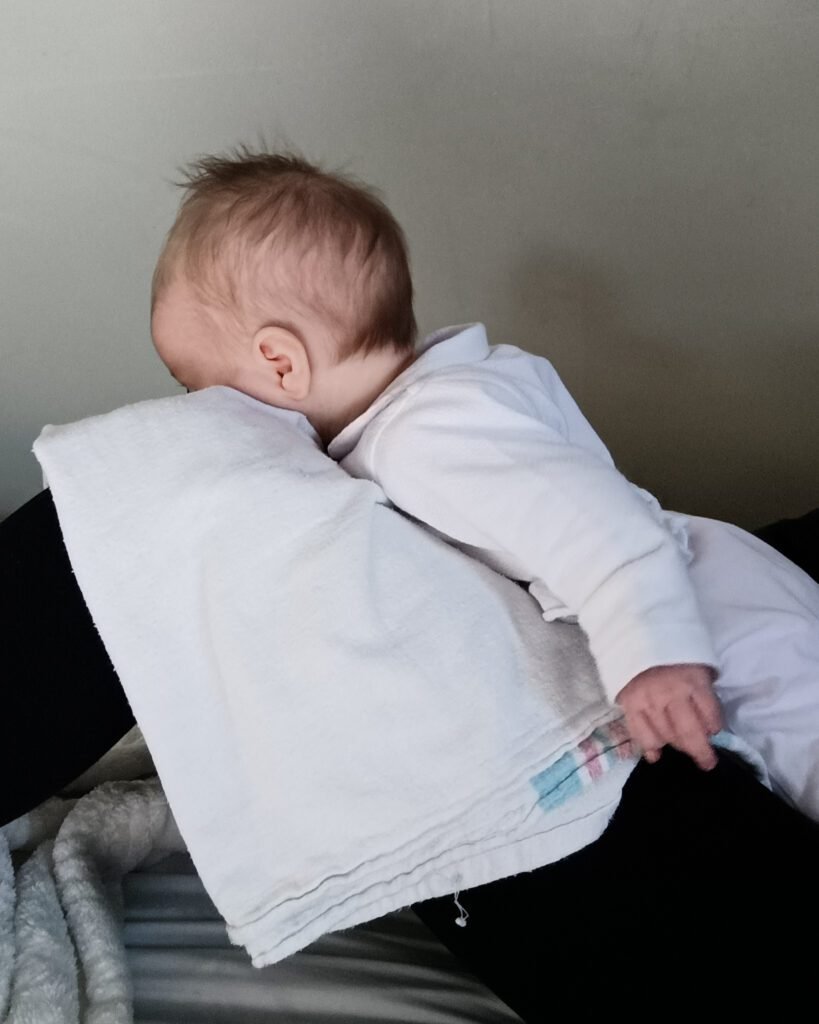
2. Chest-to-Chest Tummy Time (Motor Skills & Bonding)
- How to do it: Recline comfortably on your back and place your baby tummy-down on your chest.
- Why it helps: Strengthens neck and upper-body muscles without the frustration of the floor, all while boosting their sense of safety and attachment.
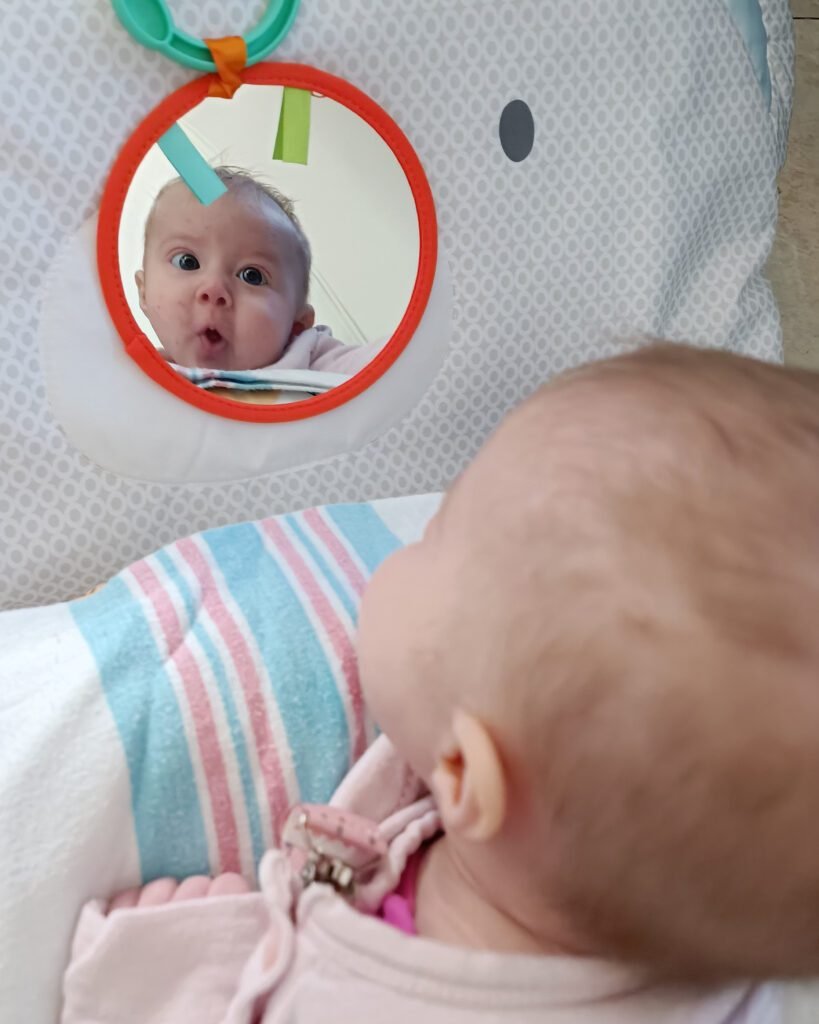
Mom Hack: With my daughter Leilah, I experimented with different angles until I found what worked best for her. One trick that worked wonders was using a nursing pillow for support so she didn’t get tired as quickly and could explore at her own pace. Remember, there’s no single “right” way to do it. What matters most is that you’re both comfortable and having fun!

3. Gentle Bicycle Legs & Stretches (Gas Relief & Motor Function)
- How to do it: Lay your baby on their back and gently move their legs in a bicycling motion, occasionally bringing their knees softly up toward their tummy.
- Why it helps: Relieves trapped gas, soothes colic symptoms, and promotes lower-body flexibility.
4. Soft Textures & Gentle Massage (Sensory Integration)
- How to do it: Use soft fabrics (like cotton, silk, or a soft feather) or warm hands with a bit of baby oil to stroke their feet, arms, and tummy gently.
- Why it helps: Develops body awareness (proprioception), relaxes the nervous system, and provides gentle tactile stimulation.

5. Low-Light Tracking (Dimmed Focus)
- How to do it: In a dimly lit room, project a soft flashlight beam on the wall and move it slowly back and forth.
- Why it helps: Helps your baby practice visual tracking and focus in low-contrast environments without overwhelming their sight.
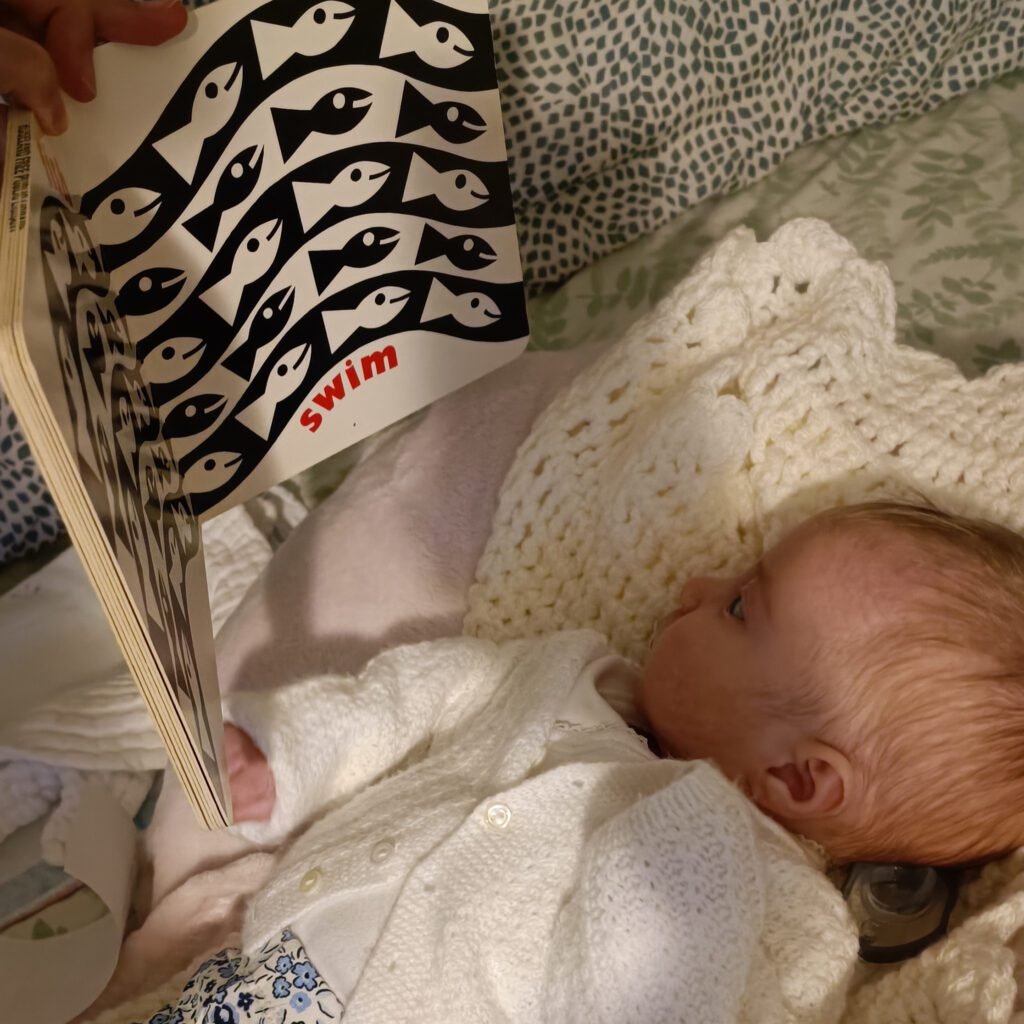
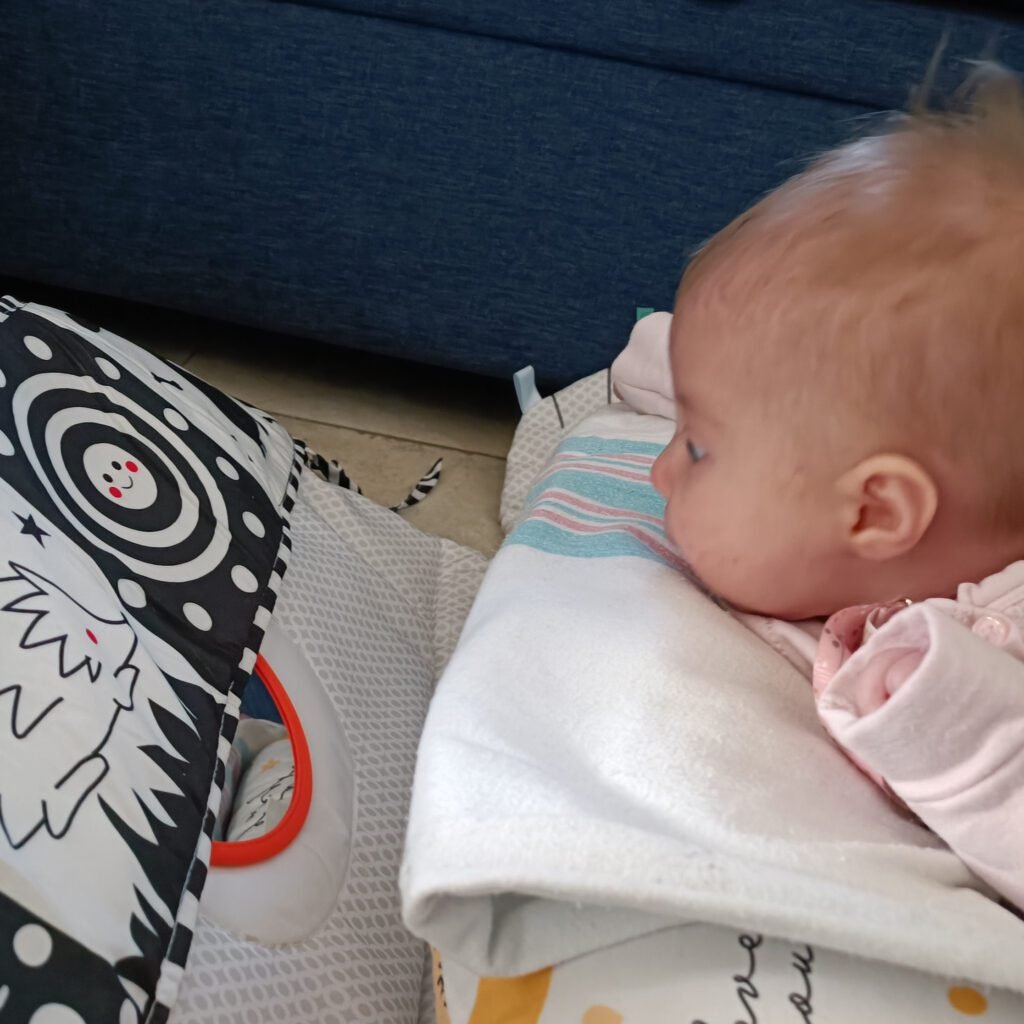
6. High-Contrast Card Exploration (Visual Development)
- How to do it: Slowly move black-and-white cards or books from left to right about 10 inches away from your baby’s face.
- Why it helps: Stimulates the visual cortex and exercises horizontal eye tracking skills.
7. “Serve and Return” Conversations (Early Language)
- How to do it: When your baby makes a coo or babble, pause, make eye contact, and respond using a warm, melodic tone (parentese).
- Why it helps: Lays the foundation for conversational turn-taking and shapes brain architecture through responsive connection.
8. Sound Location Games (Auditory Orientation)
- How to do it: Gently shake a soft rattle or talk softly to one side of their head, waiting patiently for them to slowly turn their eyes or head toward the sound.
- Why it helps: Enhances auditory localization and helps coordinate hearing with visual tracking.

9. Rhythmic Movement & Lullabies (Vestibular System)
- How to do it: Sing a soft lullaby while gently swaying, rocking, or moving their arms and legs to the rhythm.
- Why it helps: Rhythmic movement stimulates the vestibular system (balance) and calms their central nervous system.
10. Sensory House & Nature Walk (Exploring the World)
- How to do it: Carry your baby in your arms or a baby wrap around the house or garden, letting them feel a cool breeze or listen to running water from the tap.
- Why it helps: Offers a rich, pressure-free sensory experience that introduces real-world sounds, textures, and sights.

⚠️ A Quick Note on Overstimulation & Wake Windows
Keep in mind that 0 to 3-month-old babies have very short wake windows (usually just 45 to 90 minutes max)
If you notice your baby looking away, crying, yawning, or shutting their eyes, these are clear cues that they are overstimulated and ready to rest. Our golden rule as educators: play should never feel like a chore; 10 to 15 total minutes of active play a day is more than enough!
Remember: in these early weeks, just “being there” with your baby is actually doing everything. Soak in the gazes, the quiet moments, and this magical phase.
Which of these activities are you excited to try today? I’d love to hear in the comments!
👉 Follow me on Instagram [@littlepequesstudio] for daily glimpses into our journey, and early learning tips!