
Última actualización el August 5, 2026
Transitioning out of diapers is one of those big milestones in parenting that can bring up many questions, doubts, and let’s be honest, a little bit of pressure.
At Little Peques Studio, we are passionate about guiding early childhood development through respectful parenting, practical ergonomics, and real-life solutions. As a mom and early childhood educator, I know how tempting it is to look for “magic methods” that promise results in 3 days. However, real life with a toddler is very different.
Recently, we completed this process with Leilah (2 years old), and today I want to share our real experience with you: the 3 potty options that actually worked for us, the practical tips that made a difference, and how we navigated this stage with love, patience, and zero stress.
🚽 My 3 Favorite Potties (And When to Use Each)
Every child is unique, and what works at home might not work when you’re out and about. Having options gave Leilah confidence and made our daily routine so much easier, especially during our road trips and daily outings.
Here are the 3 items we used:
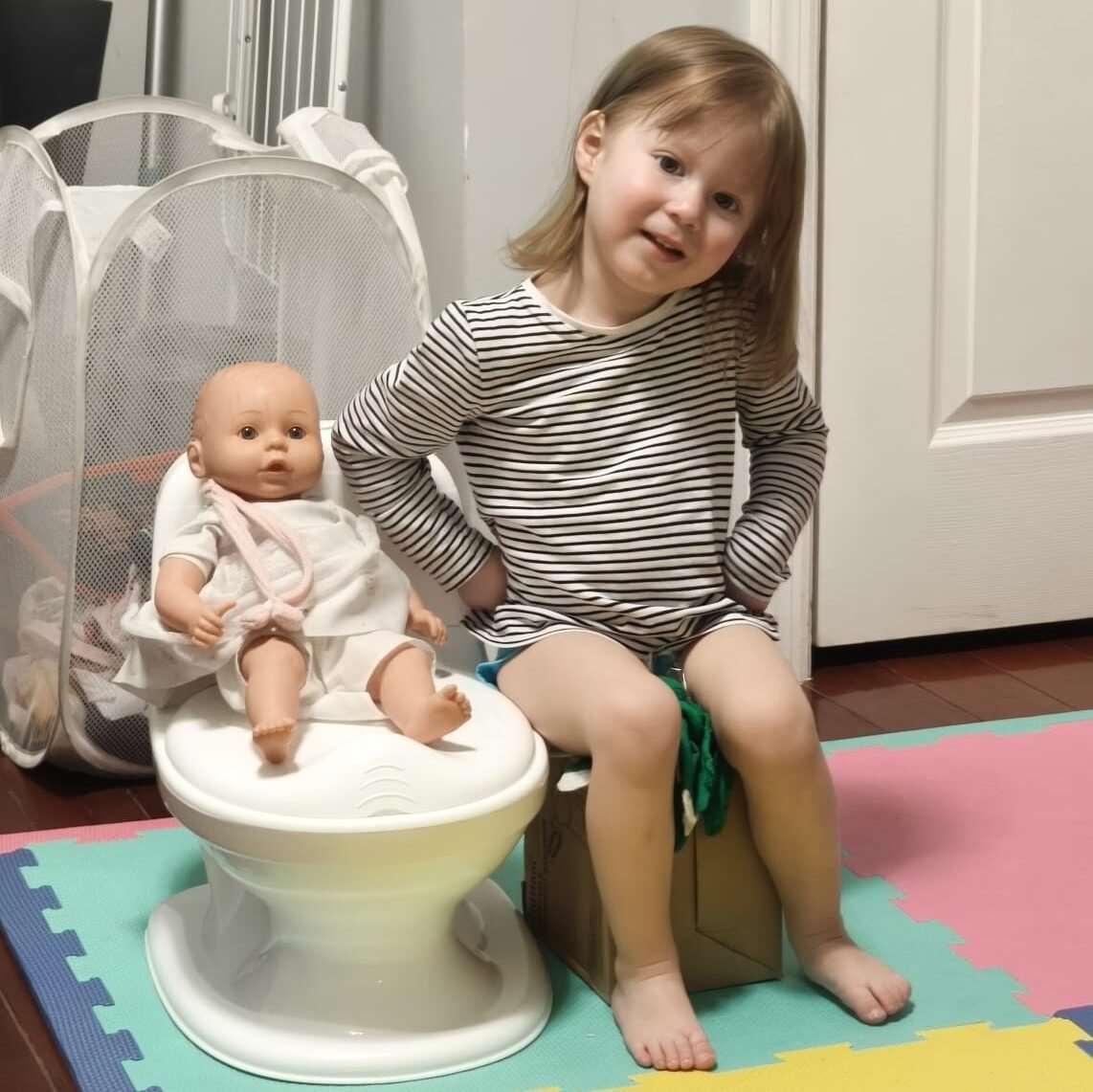
1. The Classic Toddler Potty (Super Accessible)
Why I love it: Simple, lightweight, and placed at her height right in our bathroom. It allowed her to sit down completely independently without asking for help or climbing onto anything.
When to use it: Ideal for the first stage or to keep in her bedroom/play area. Being at her height encourages her to recognize the urge and go without hesitation.
💡 Teacher’s Ergonomic Tip: Having her feet firmly resting on the floor provides the ideal anatomical posture for eliminating waste. Keeping their feet grounded prevents strain and promotes natural digestion.
2. The Toilet Seat Reducer with a Step Stool (To Copy the Big Kids)
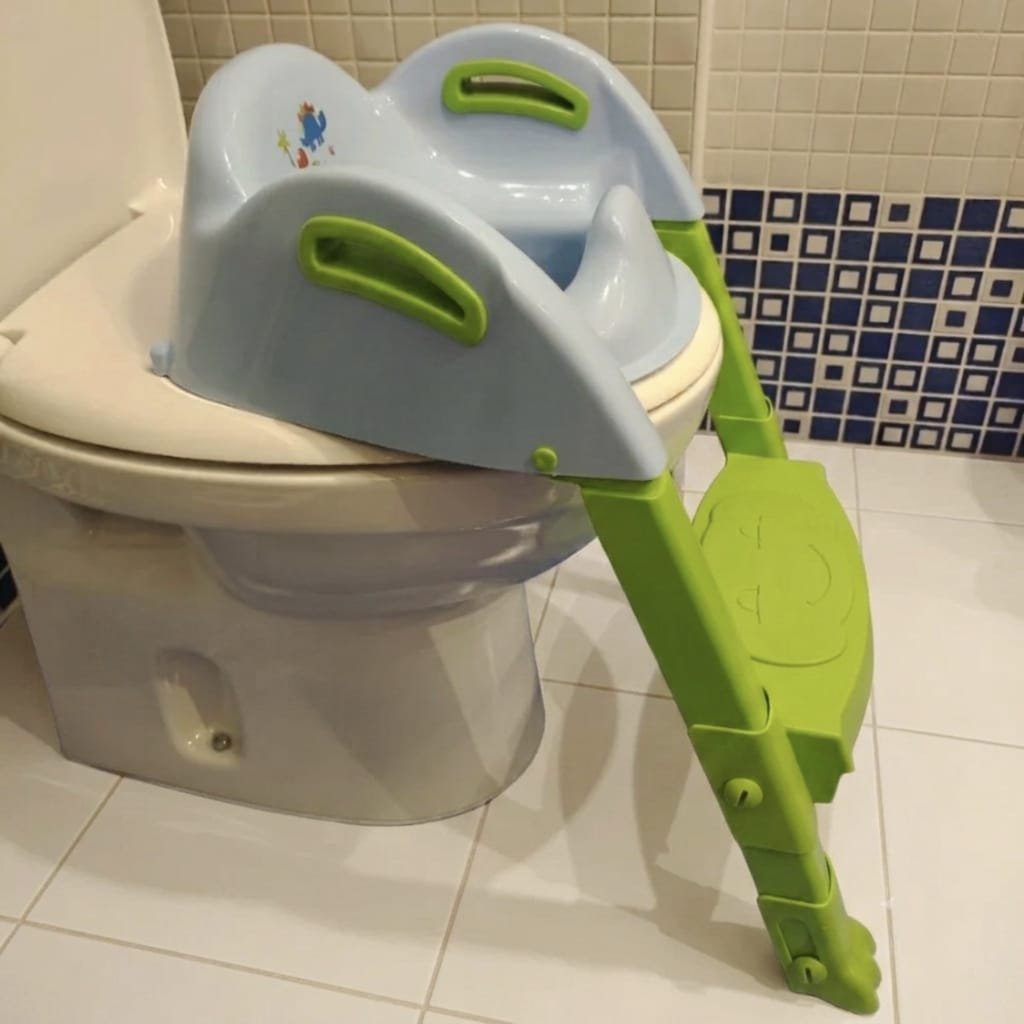
Why I love it: Makes them feel so grown-up by imitating mom and dad, while keeping your house free of multiple potties to clean constantly.
When to use it: Excellent for the main bathroom. The built-in ladder gives them the support needed to climb independently and rest their feet (essential to prevent anxiety or constipation caused by dangling legs).
3. The Potette Plus Portable Potty (Our Ultimate Travel Savior!)
Why I love it: The total game-changer that saves the day! It folds flat, taking up minimal space in your diaper bag or car trunk.
⭐ Our Top Recommendation: Potette Plus
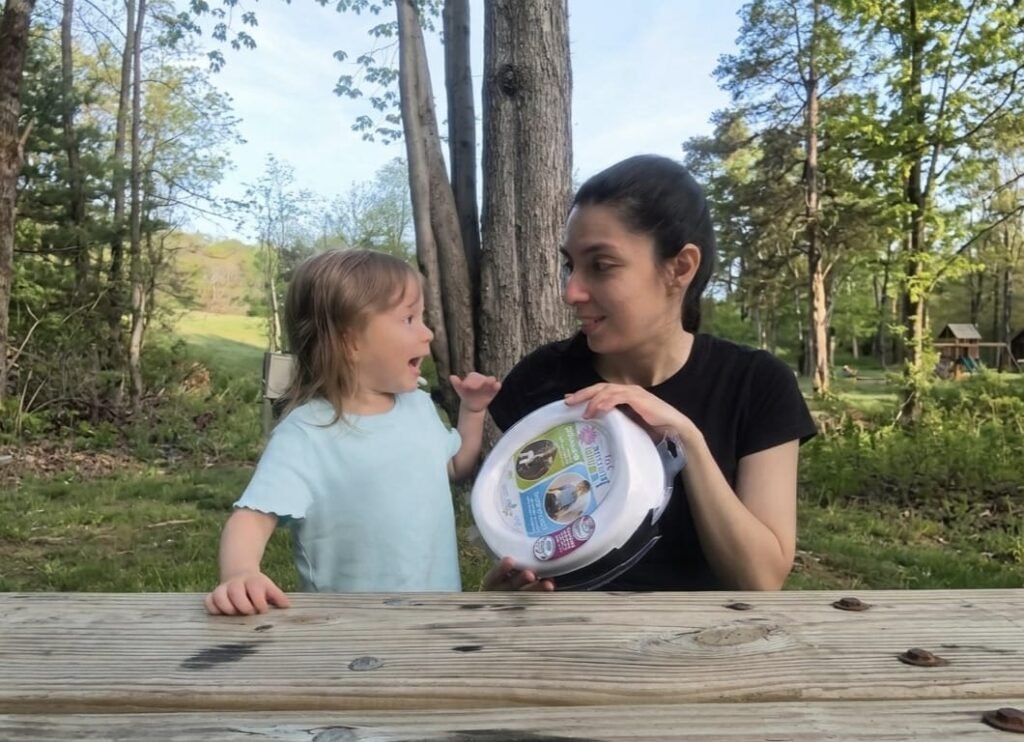
In our home, we are absolute fans of the Potette Plus. We used it constantly during our East Coast road trip across the US, and it was a true lifesaver.
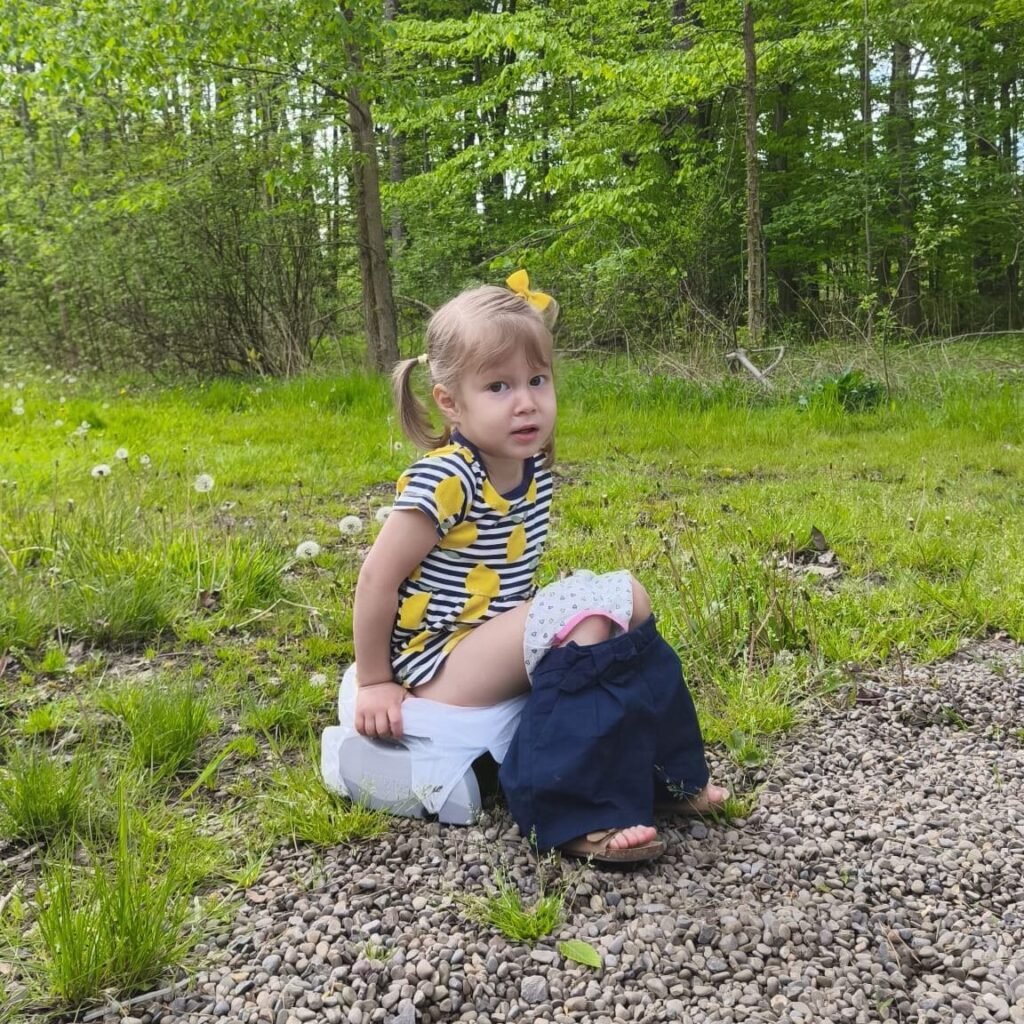
Dual functionality: Works both as a standalone potty with biodegradable bags (a lifesaver when you hear “Mama, pee-pee!” in the middle of a highway or at a park with no restrooms) and as a non-slip reducer seat for public toilets.
When to use it: For park visits, travel, or day trips. When toddlers are learning, the time window between needing to go and an accident is only a few seconds, and a clean public bathroom isn’t always nearby.
💡 My 5 Golden Tips for a Gentle Potty Training Journey
If you are ready to begin, here are the exact strategies that worked best for us:
1. Preparing Without Pressure: We Started at 10 Months Old
Before taking away diapers cold turkey, talk about the bathroom naturally. Read books together about using the potty, let your toddler accompany you to the bathroom, and let them get familiar with their potty days before actually using it… even when they are babies!
In our case, I started with Leilah when she was just 10 months old. We kept a toddler-sized potty in the bathroom, and every time I went, I would say out loud: “Mama pee-pee!” She would come with me, sit on her potty, and keep me company. My only goal back then was to build a natural visual connection with the space.
2. The “Bathroom Routine” and Respecting Their Readiness
At 2 years old, toddlers get hyper-focused on playing and easily forget to go. Set gentle key moments throughout the day to invite them to sit (when waking up, before leaving the house, before naptime, or after meals). If she says no, don’t force it; just try again a bit later.
💬 Mom Confession: I started feeling a lot of pressure because she couldn’t wear diapers once school started, and many of her daycare classmates were already potty trained. Believe me: every child has their own timeline. Knowing bathroom vocabulary isn’t enough; their physical body needs to reach the developmental maturity required to hold it in or give advance notice. And almost overnight, she was the one who suddenly said: “Mama, pee-pee!” and ran to the bathroom.

3. Dress Her in Easy, Fast Clothes (And My Trick for Dresses!)
Forget about overalls, complicated buttons, belts, or tight tights. Opt for simple clothes that foster independence, like elastic waistband pants.
For me, this was the trickiest part because Leilah is obsessed with dresses, and holding up a dress while pulling down undies is tough for a toddler! My solution? I took advantage of the summer weather and let her wear just underwear at home. Once she mastered that, we gradually moved on to elastic pants for practice.
4. Accidents are normal : They Are Part of Learning
Accidents aren’t setbacks; they are a natural part of the learning process. If an accident happens, stay calm. A neutral tone and a reassuring “It’s okay! Let me help you clean it up” prevents them from feeling guilt or frustration.
One time, a little bit leaked out right before Leilah reached the potty. She looked at me and said: “Ups mommy, dirty”. Instead of correcting her, I celebrated that she managed to get to the potty before it all came out! Seeing the positive side of every small win completely changes the energy.
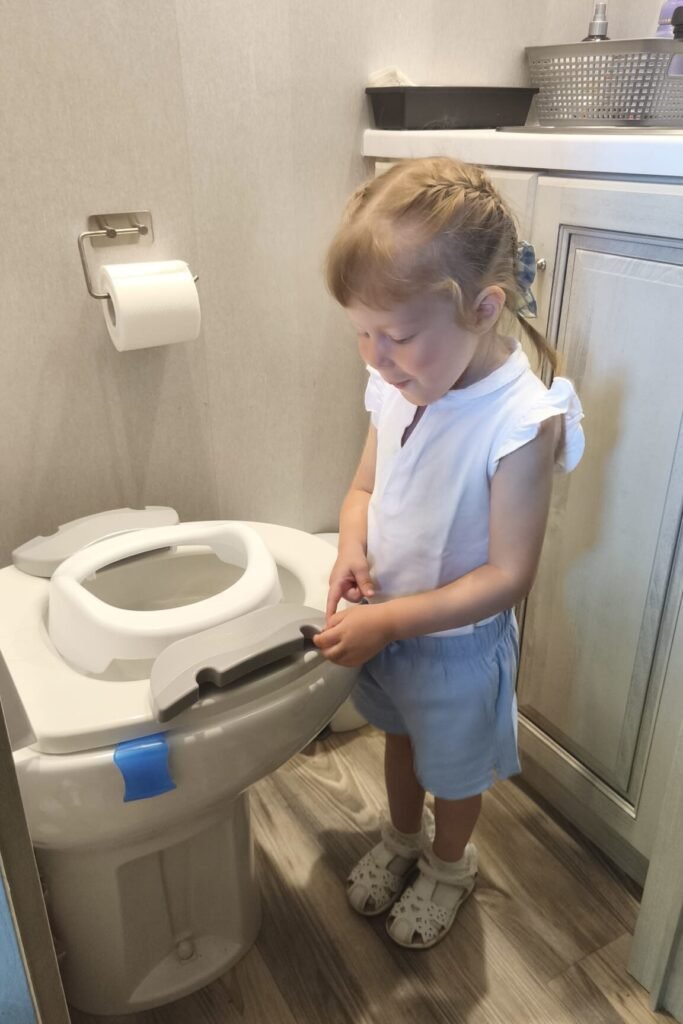
5. Praise the Effort, Not Just the Result (Why I Ditched the Sticker Chart)
At first, I tried using a sticker reward chart. Spoiler: it backfired completely! Leilah would sit down for a second, say “nothing came out,” and demand her sticker!
I dropped the stickers and switched to genuine positive verbal encouragement: “Wow, look how fast you ran!” or “Yay! Your underwear is dry, awesome job!”. These are real words that toddlers value far more than any material reward.
🌙 Scientific Note: What About Nighttime Potty Training?
It is super important to remember that daytime and nighttime potty training are two completely different processes. Nighttime dryness is a physiological, hormonal, and neuromuscular milestone: their body needs to produce enough vasopressin (the hormone that reduces urine production at night), and their brain needs to learn to wake up to a full bladder signal.
We are keeping nighttime diapers with total peace of mind. We will know Leilah is ready when she wakes up with a completely dry diaper for several weeks in a row. No pressure!
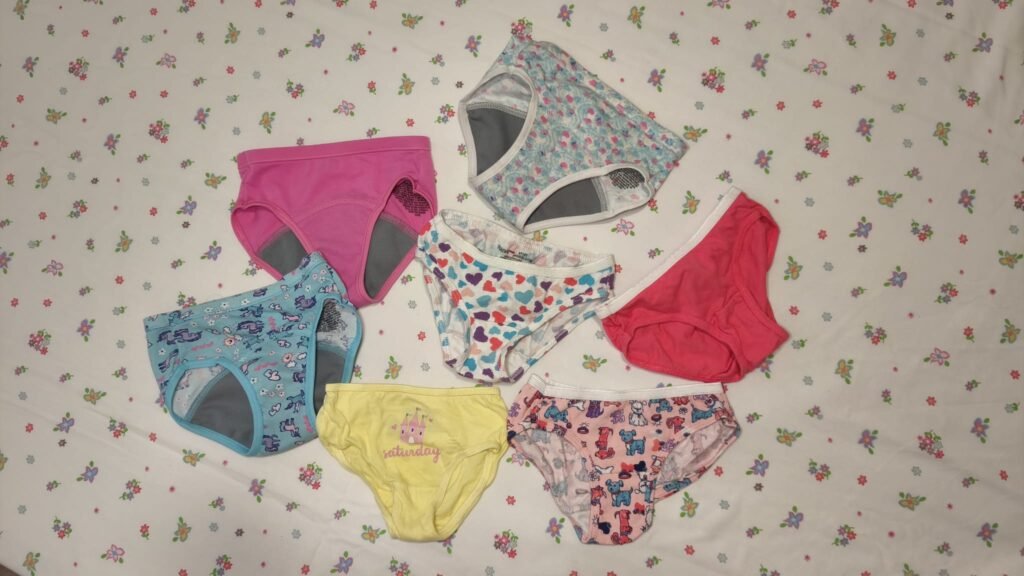
Looking at these little undies hanging in the closet might seem like a tiny detail, but for us, it represents months of patience, laughs, a few spills, and deep respect for her own timing.
Remember that this is not a race. There will be great days and pause days, and that is completely normal! Guiding your child with love, patience, and understanding will build a beautiful bond of trust between you both.
JOIN OUR COMMUNITY
Are you ready to start this journey with your toddler, or are you already in the middle of it?
📌 Save this post to your Pinterest board on Gentle Parenting / Toddler Tips so you have it handy when you need a refresher!
📩 Leave a comment below: Which of the 3 potties do you think your toddler would like best? I’d love to hear your story!
REPRESENT A JUNIOR CLOTHING, TOY, OR PUERICULTURE BRAND?
At Little Peques Studio, we create data-driven Pinterest SEO strategies and produce high-converting UGC visual assets that solve real problems for families with toddlers (ages 0–3).
✉️ Let’s collaborate: Contact us at littlepequesstudio@gmail.com